Headscale Series: Headscale Stress Testing
· 2 min read
This article documents a practical stress-test workflow for headscale at around 200 concurrent clients, including environment sizing, bootstrap scripts, churn tests, and traffic sampling.
Original post: headscale系列:headsale压力测试
Test Scripts
- Repository: OwnDing/headscale-test-scripts
Quick Runbook
# 1) Prepare env
cp .env.example .env

# 2) Validate host environment
bash scripts/00_check_env.sh

# 3) Bootstrap clients (default 200)
bash scripts/01_bootstrap_up.sh

# 4) Export node list
bash scripts/02_list_nodes.sh

# 5) Churn test (terminal A)
bash scripts/03_churn.sh

# 6) Traffic rounds (terminal B)
watch -n 20 'bash scripts/04_traffic_round.sh'

# 7) Cleanup
bash scripts/99_cleanup.sh
Key Environment Variables
HEADSCALE_URL=https://headscale.example.com
TS_AUTHKEY=tskey-auth-xxxxxxxxxxxxxxxxxxxxxxxxxxxx

REPLICAS=200
CHURN_INTERVAL=30
CHURN_BATCH_PERCENT=10
TRAFFIC_PAIR_COUNT=30
TRAFFIC_TCP_DURATION=10
TRAFFIC_TCP_PARALLEL=4
TRAFFIC_UDP_DURATION=10
TRAFFIC_UDP_BW=50M
Recommended Sizing (200 devices)
- Load generator: 16 vCPU / 32 GB / 100 GB NVMe
- Headscale control plane target: 4 vCPU / 8 GB / 100 GB
- Optional DERP relay: 2-4 vCPU / 2-4 GB
Script Roles
00_check_env.sh: validate docker/compose/tun and pre-pull images.01_bootstrap_up.sh: scale client containers toREPLICAS.02_list_nodes.sh: exportnodes.tsv(container -> Tailnet IPv4).03_churn.sh: periodic randomup/down/restart.04_traffic_round.sh: random TCP/UDP pair traffic rounds.99_cleanup.sh: stop and remove test containers and sidecars.
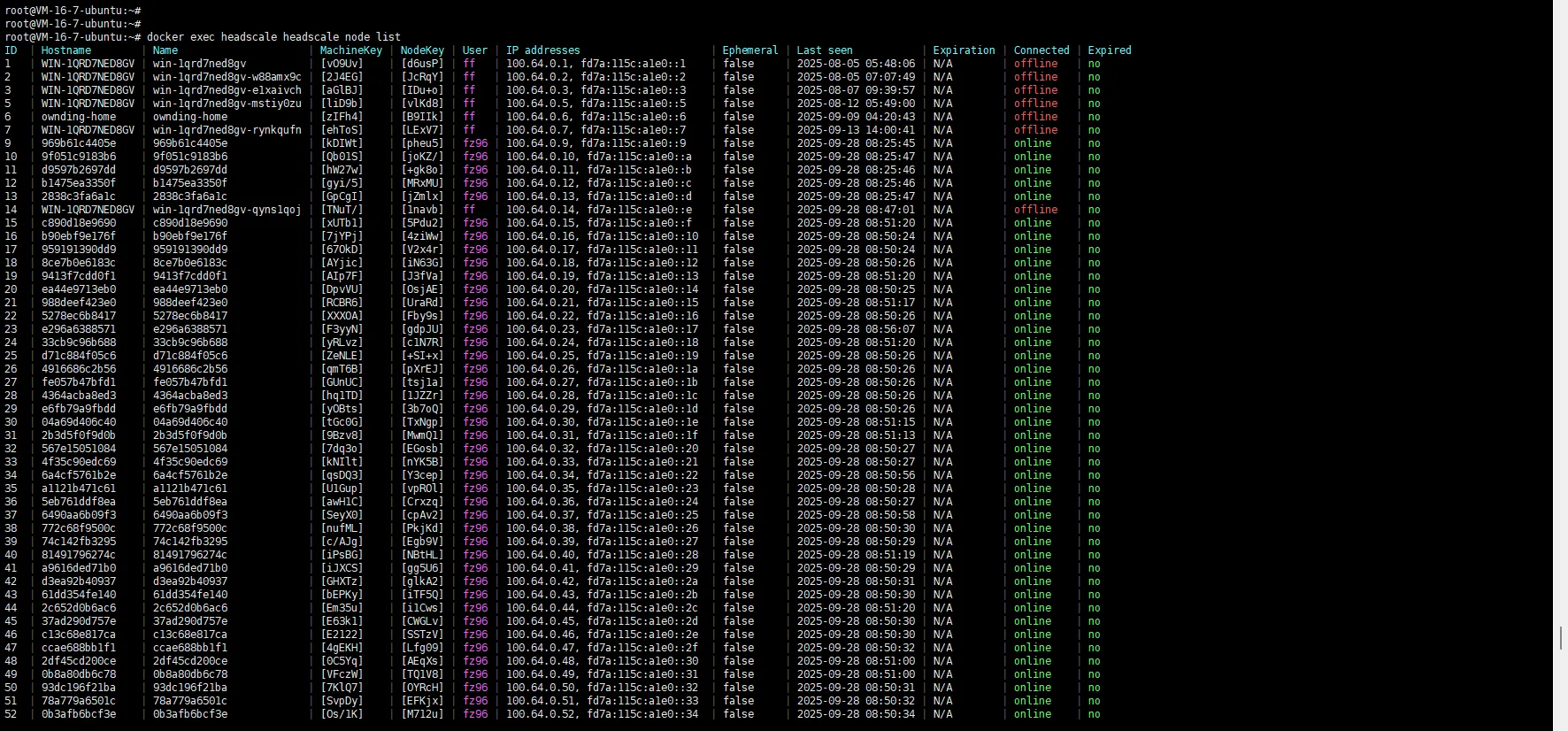
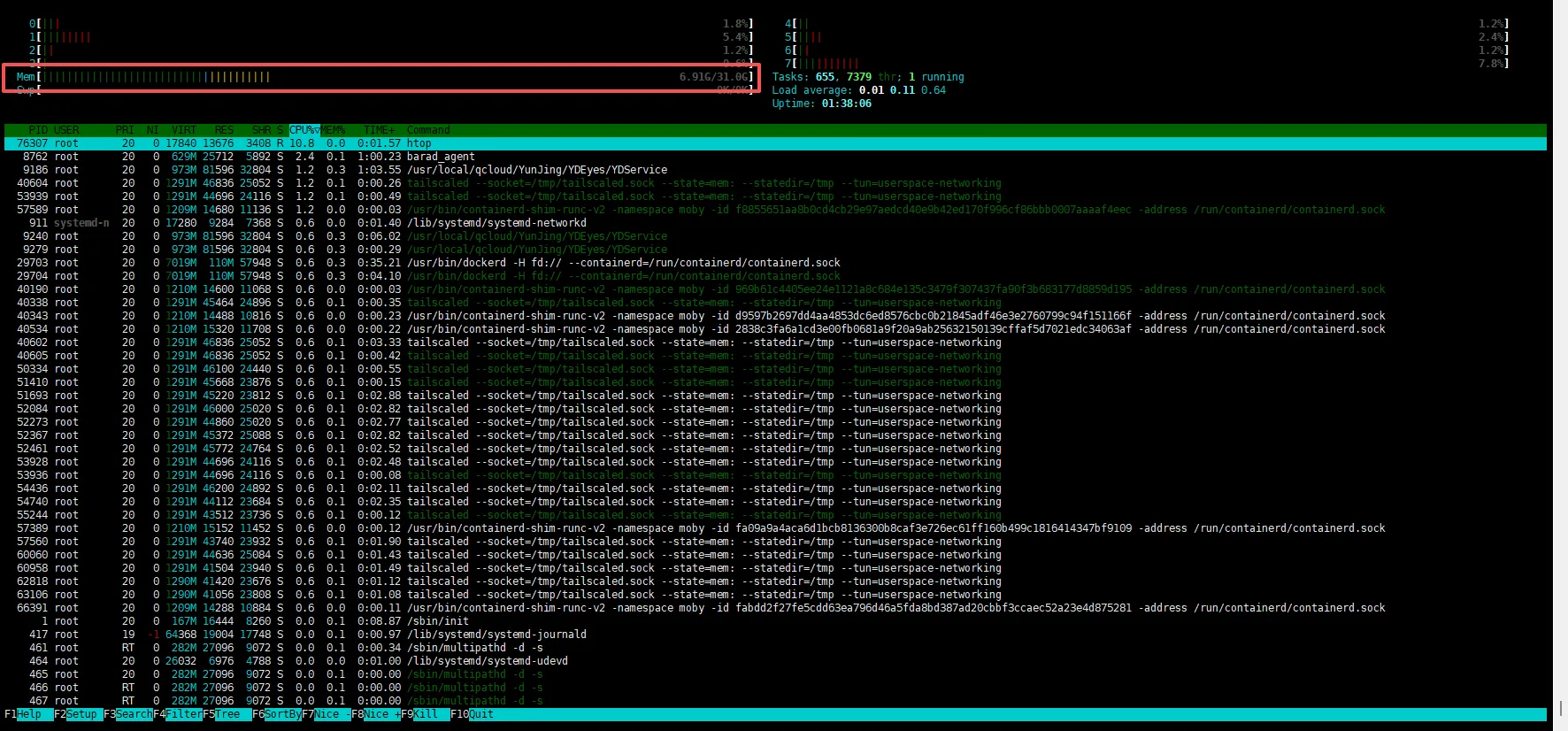
Result Screenshots

This article is mirrored on the Larktun blog. For source updates and original context, refer to: headscale系列:headsale压力测试