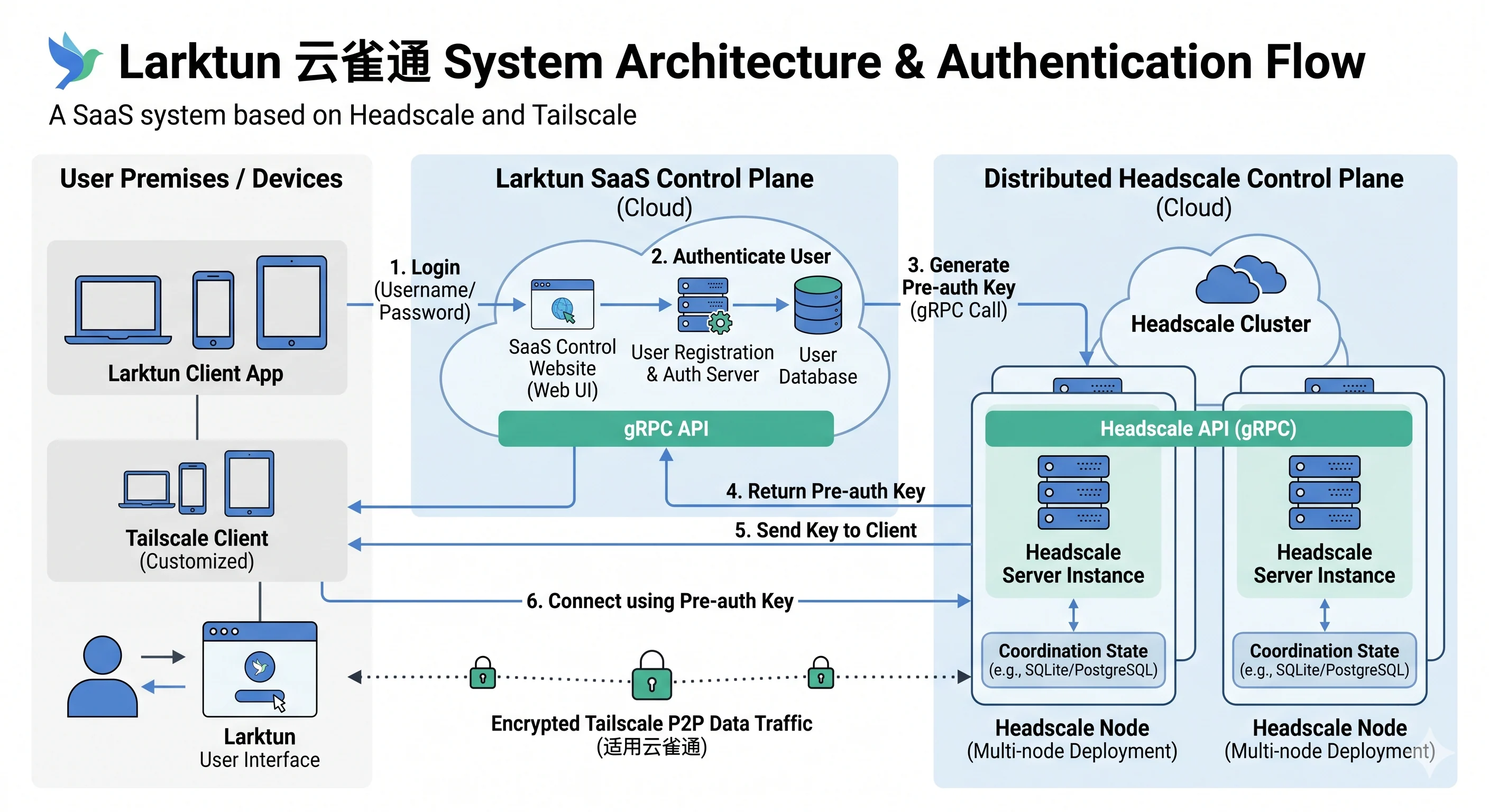
Product Architecture
Larktun can be described in four layers: SaaS control, tenant network control, relay, and endpoint execution. The goal is to deliver stable and lightweight remote access while keeping strict tenant isolation.
Architecture layers
- SaaS control layer: tenant lifecycle, identity verification, policy distribution, and audit aggregation
- Tenant network control layer: isolated network state, device inventory, and ACL state per tenant
- Relay layer: traffic forwarding fallback with shared, dedicated, or user-managed relay options
- Endpoint execution layer: encrypted path setup and ACL enforcement with low-memory background runtime
How tenant isolation is enforced
- Devices, user groups, and policy sets are maintained per tenant
- ACL evaluation is tenant-scoped with no cross-tenant inheritance
- Audit logs are archived per tenant for traceability and compliance reviews
Choosing relay strategy
- Shared relay: best for individual free users, quick validation, and small-team rollouts
- Dedicated relay: best for higher stability and predictable capacity
- User-managed relay: best for custom boundary, region, or compliance requirements
Stability and footprint design
- Prefer direct path first, then relay fallback when needed
- Keep path health monitoring and auto-reconnect enabled
- Maintain low endpoint memory footprint for long-running sessions
Interactive simulator
Interactive architecture simulator
Open full demoRun login, direct path, and DERP relay flows directly inside the docs page, or open the full demo in a separate tab.
The embedded simulator currently uses Chinese UI labels, while the interaction flow is the same.
Architecture diagram